

Maynilad’s handwashing stations for schools in Muntinlupa and Navotas show how access to the right hygiene facilities helps keep children healthy
At Daanghari Elementary School in Navotas City, hundreds of students line up for a handful of faucets. By the time the line reaches the back, the soap is already gone.
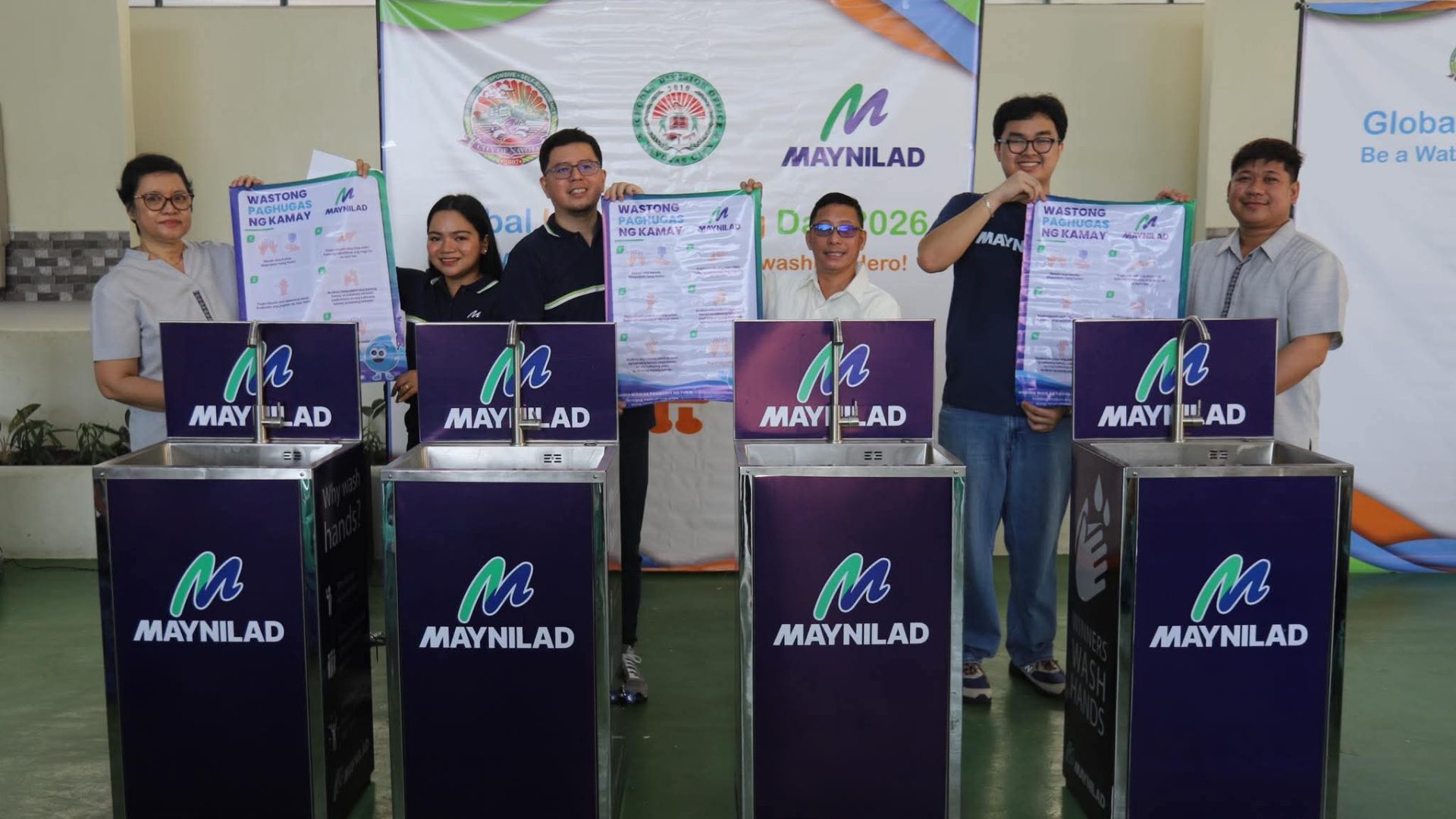 DepEd-Navotas officials welcome the donation of modular handwashing stations and IEC materials by Maynilad.
A teacher watched too many students face this problem and lamented how many of the kids sit down to eat or finish school activities with unwashed hands.
“Lima na ang handwashing areas sa campus, kung tutuusin. Pero pag nagkasabay-sabay pag PE or gardening or experiment, ‘yung iba di na nakakapaghugas,“ Grade 6 Math teacher Elmer Espritu said. “Nakakabahala rin dahil puwedeng mag-cause ng pagkalat ng sakit ‘yon sa kanila. Apektado ang attendance at performance sa klase.”
Handwashing with soap is one of the most effective ways to reduce disease transmission. According to several clinical studies, handwashing lessens the risk of illness by 30% and reduces diarrheal morbidity by 20%.
During the week of Global Handwashing Day, Maynilad Water Services Inc. eased the shortage of taps in schools as the company installed modular handwashing stations in ten campuses: six schools in Navotas, Daanghari among them, and four schools in Muntinlupa.
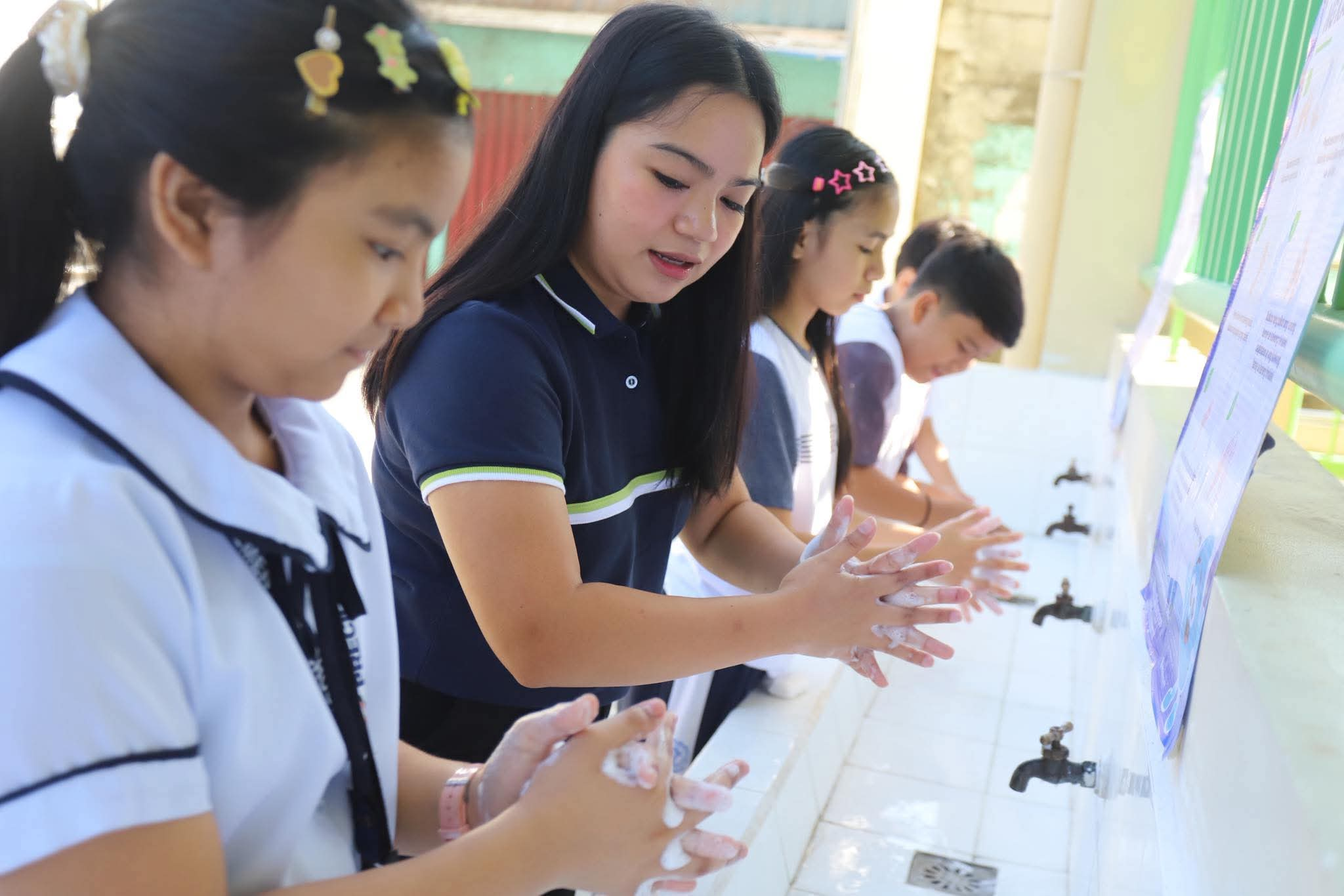 Maynilad taught learners at Daanghari Elementary School the right way to wash hands.
It All Starts with Water
On paper, most schools have basic handwashing facilities. According to the latest report by the Department of Education, 92.4% of public elementary schools in the country have access to handwashing facilities on campus. The figure is 89% for public junior high schools, while public senior high schools have 85.3%. Overall, that leaves roughly one in nine public junior high schools and one in seven public senior high schools without them.
“Mahal pa naman magkasakit, at marami sa mga estudyante namin ay galing sa low-income families,” Grade 4 MAPE teacher Felizardo C. Clemente said. “Siyempre, kung nakakapaghugas ng kamay, nakakaiwas sa sakit. Kung walang sakit, iwas gastos sa gamot at doktor.”
Maynilad’s Rosmon Tuazon, Head of Corporate Marketing, says the stations are meant to close that gap and give schools the facilities they need.
“We recognize that not all schools have sufficient handwashing areas,” Tuazon said. “Having these facilities encourages more students to develop a habit, and it makes it accessible for all to do it more often.”
Combining hygiene and environment education
Maynilad also took the lesson beyond the faucet through its WASH (water, sanitation and hygiene) and environmental education initiatives. It told the students of Sucat Senior High School in Muntinlupa City why reliable water is crucial to the success of a hygiene campaign. It told Daanghari Elementary School students why water conservation matters. The company also shared how the management of wastewater completes the picture of a healthy and vibrant community. The goal is simple: nobody gets sick, and this starts at home and is carried to key public spaces like schools.
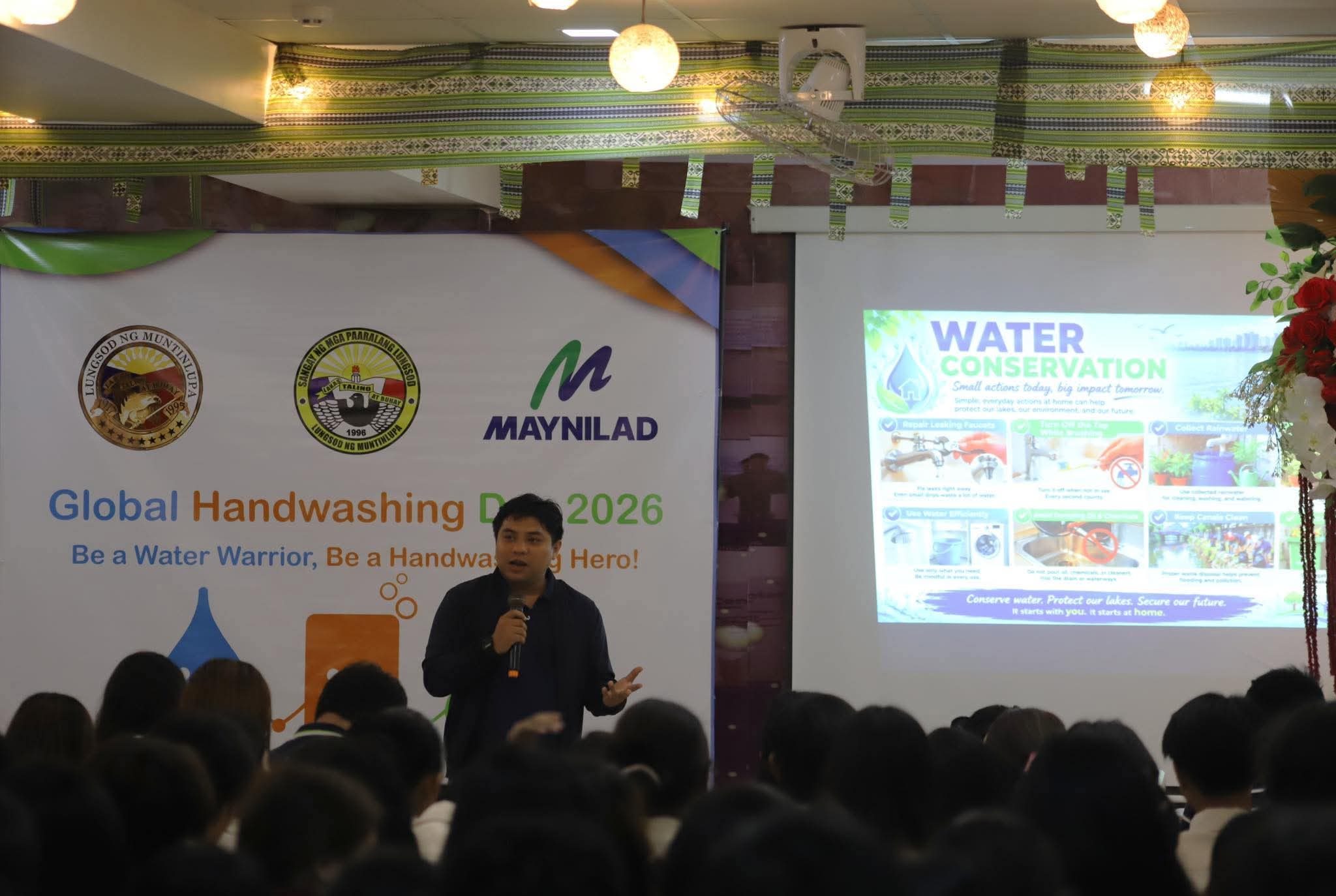 Maynilad partnered with stakeholders such as the Muntinlupa City Lake Management Office to share about water conservation and water resource protection with high schoolers as part of its GHD education drive.
Maynilad’s Marie Antonette H. De Ocampo, VP and Head of Corporate Affairs and Communications, says the lesson is as much about forming the right habits and water conservation as it is about water resources and supply networks.
“A healthy community starts with what children learn early,” De Ocampo says. “When they know where water comes from and where it goes, they take care of both.”
The many hands that keep it going
“We always go back to the basics of a hygiene campaign: provide the right tools, encourage the right habit,” Rosmon Tuazon said. “Students and teachers use handwashing stations. Administrators maintain the facilities. Advocates like Maynilad help fill gaps such as the need to sustain awareness. Each of these players makes it possible for the school to turn handwashing into a habit.”
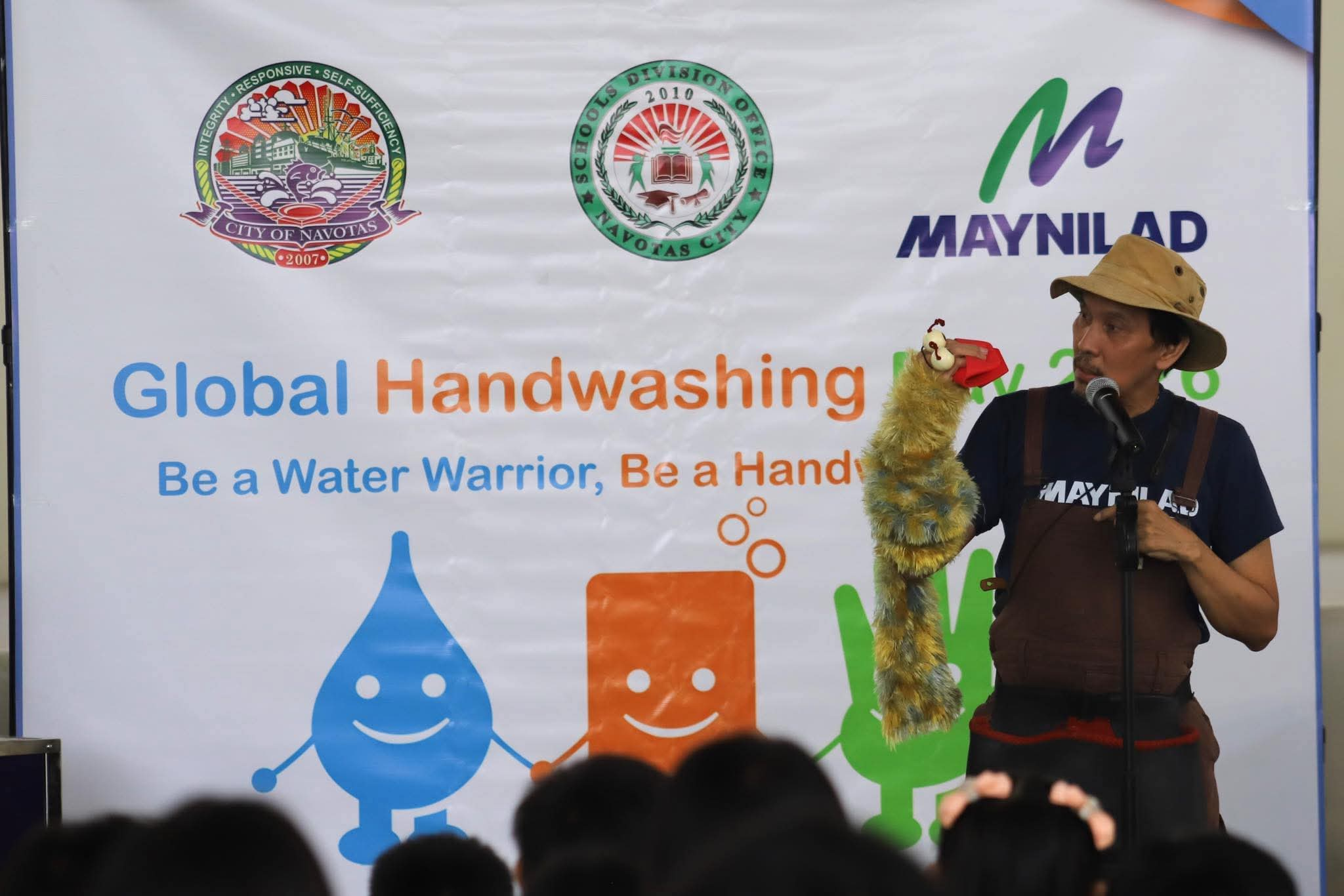 Maynilad employs creative teaching strategies to teach water, sanitation, hygiene, and environmental responsibility.
The habit also leaves the campus. Children who practice it at school carry it back home, teach their siblings, and remind their parents to wash up before meals.
“We aim to turn WASH into a community effort,” Marie Antonette H. De Ocampo said. “We want households to learn not to take each drop for granted. We need customers to report leaks. We need people to protect rivers and other bodies of water. Water, sanitation, hygiene, education, and the environment may sound like separate agendas. In our WASH education drives, they all meet at the faucet.”
Back in the line, the students wash more often now. A teacher watches, and this time, he sees students scrub between their fingers, without needing to be reminded.