




The Design Center of the Philippines recognizes Filipino designs that go beyond aesthetics, honoring works rooted in malasakit, the uniquely Filipino value of compassionate care for the people they serve.
The Good Design Award Philippines held its 2026 awarding ceremony at the Likhang Filipino Exhibition Halls, recognizing designs that passed not only the universal standards of form, function, and innovation, but the one criterion that belongs to the Philippines alone: malasakit. Across six categories, the awardees span objects and architecture, images and services, materials born of waste, and civic programs built on design thinking. What they share is not a style or a discipline. It is an obligation to the people their designs exist for.
From 311 entries submitted across Luzon, Visayas, and Mindanao, 246 passed validation and 84 were shortlisted. A final jury of practitioners, academics, and specialists from the Design Advisory Council, the Good Design Award Japan (G Mark), and the United Nations Development Programme made the final selections on 18 May 2026, following exhibit presentations and live hearing sessions with the entrants themselves.
For Design Center of the Philippines executive director Maria Rita O. Matute, the works honoredanswered many questions related to Good Design Award Philippines’ core value of malasakit: “Filipino designers have a higher obligation beyond making things beautiful. Malasakit is not a sentiment – it is a design standard. It asks: who is this for, what problem does it solve, and what does the world look like after this design exists? The works we honor tonight answered that question with conviction.
The 2026 Awardees
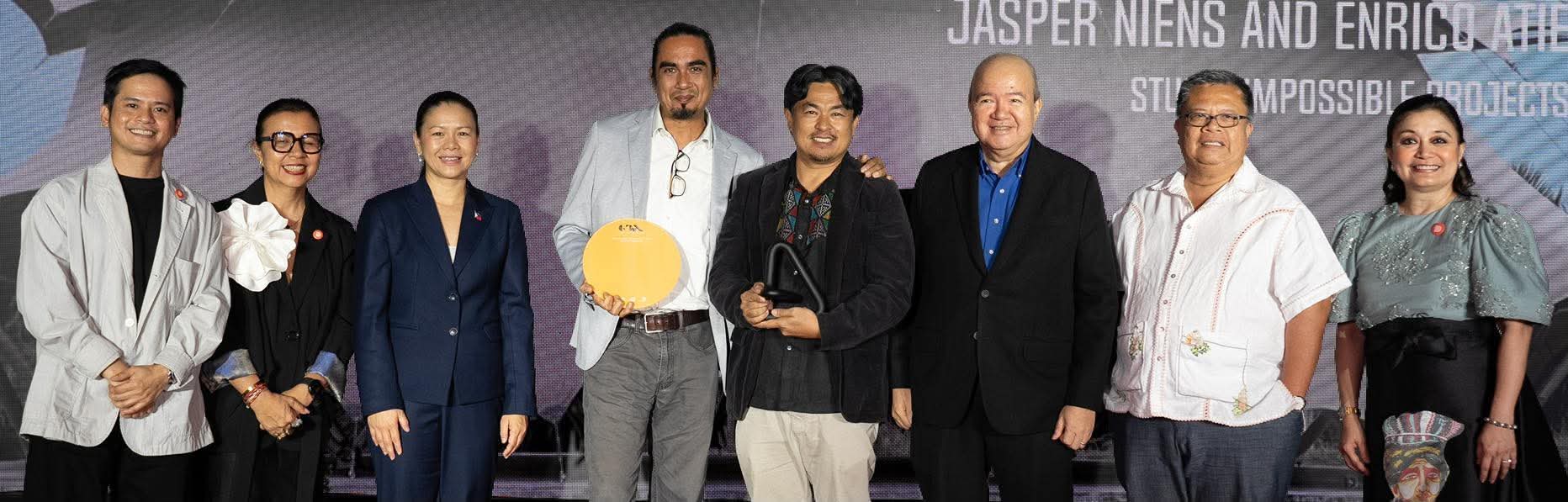 (L-R) Design Center Philippines deputy executive director Lucky Lopez and executive director Rhea Matute, Department of Trade and Industry assistant secretary Nylah Rizza Bautista, Malasakit Award and Gold Award for placing making category recipients Enrico Atienza and Oscar Sarmiento, Jr., Good Design Awards Philippines place making head juror Ar. Dominic Galicia, DTI assistant secretary Al Valenciano, Design Advisory Council chair and jury Mylene Abiva.
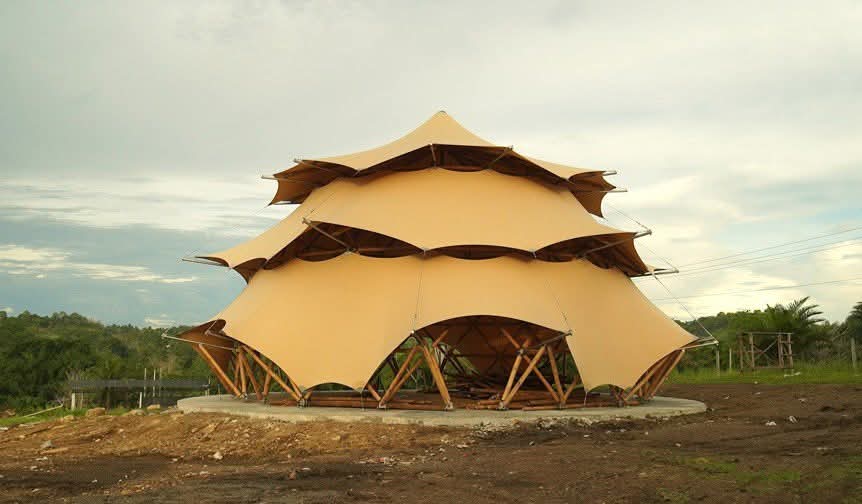
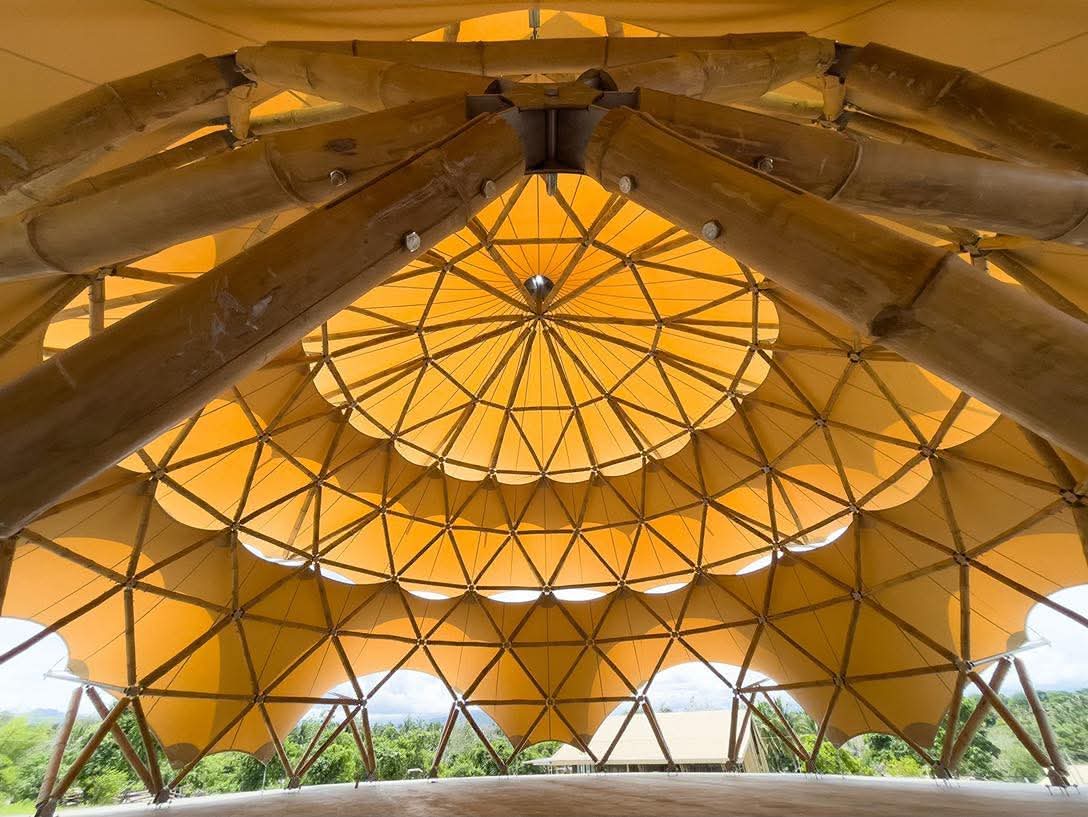 Banwag, designed by Studio Impossible Project under the Place Making category, recipient of Malasakit Award for exemplifying innovation for improving the quality of life of communities and fellow citizens.
The Malasakit Award is the highest recognition conferred by the Good Design Award Philippines. Presented exclusively to the Gold Awardee whose design exemplifies innovation while advancing the United Nations Sustainable Development Goals (SDGs) and improving the quality of life of communities and fellow citizens, this year’s award was given to Banwag, designed by Studio Impossible Project under the Place Making category. A permanent structure conceived as a shared ground for three communities with a long history of conflict – Muslim, Christian, and Lumad – Banwag is among the most direct expressions of malasakit the award has seen: a design whose entire purpose is to hold space for people who have long been kept apart.
 (L-R) Design Center Philippines deputy executive director Lucky Lopez and executive director Rhea Matute, Department of Trade and Industry assistant secretary Nylah Rizza Bautista, Good Design Awards Philippines image making head juror Melvin Mangada, Gold Award for image making category recipients Jouzen P. Peramo, Nastassja Kirsten T. Sanchez, Maxime Reginald A. Velas, Eric Daniel M. Marcelo, DTI assistant secretary Al Valenciano, Design Advisory Council chair and jury Mylene Abiva.
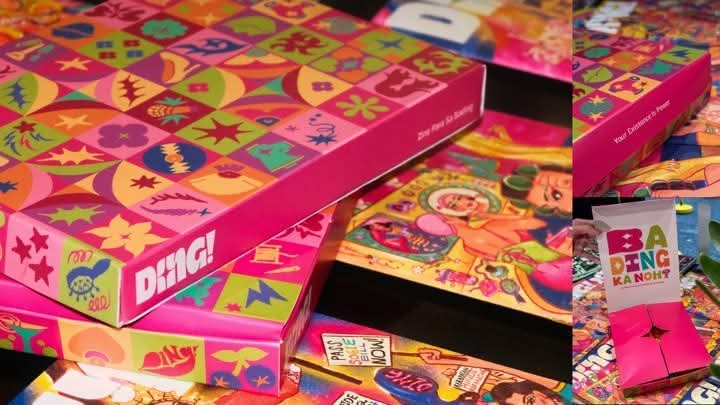
 Ding! Zine para sa Bading, designed by the students of CIIT College of Arts and Technology, received the Gold Award in the Image Making category for tracing the evolution of Filipino drag, safe spaces, and queer power.
Gold Awards, representing the highest level of excellence within a category, were also presented to Ding! Zinepara sa Bading, designed by the students of CIIT College of Arts and Technology. This Image Making winner was recognized as an editorial outlet that traces the evolution of Filipino drag, safe spaces, and queer power.
The jurors also conferred 22 Red Awards to entries that satisfied all five screening perspectives – form, function, innovation, positive user experience, and malasakit.
The Red Awardees are:
The awardees under Image Making are as follows: QC Stories: The City We Call Home by Do Good Studio; Forgotten by The Tribe – GGC Group Asia; Nexus: A Filipino Architecture as a Network in Constant Remaking by Bien Alvarez; Haring Ibon Playing Cards by Birds in Focus, Inc.; Pista ng Kapuluan: Archipelago Festival and Biennale by Tukod Foundation; Salumpuwit: Chairs in Filipino Life by Arc LicoInternational Services Corp. and Facade Books; and Request sa Radyo by Theatre Group Asia and Ayala Land.
Under Object Making: Ihawi by Selena Placino and Hiblatech Ventures, Inc.; Make-a: Pusô DIY Kit by White Brick Creative Studio Corp.; Kai’a Outdoor Hanging Lamp by Chini Lichangco; Champion Detergent Table Clothes by TBWA \ Santiago Mangada Puno; Celestina Rugs by Hacienda Crafts; and Curio by Kenneth Cobonpue.
Under Place Making: &Matcha Three Yards by MLA-at-Home; Pasig River Urban Development by WTA Architecture and Design Studio; Mamanwa Community Center by Kaiserslautern University of Applied Sciences, Mamanwa Community, Kawayan Collective and Project Partners; Alhibe: A Regenerative Placemaking anchored by Bamboo Architecture by M+S Studio Co. Ltd.; Comuna by Jumnie RamanaDevelopers, Inc.; Urban Forestry Institute Diliman by Karl Castro and Mede Studio / KaLIKHAsan: Outdoor Projects on Campus Ecology; and Atok Barnhouse by Ninety Design Studio.
Under Systems and Service Design: Zero Waste Textile Circular Solution by ANTHILL Fabric Gallery, Inc.; and Oyloop by Klimatech Innovative Solutions, Inc.
Three special recognitions were also conferred:
The Green Award was conferred on the Mamanwa Community Center for demonstrating that sustainability gains meaning through cultural utility and everyday use. Serving as a health center, learning hub, and community gathering space, the project combines climate-adapted design, renewable materials, and deep collaboration with the Mamanwa community to advance the Sustainable Development Goals in practice.
The White Citation was awarded to KADLIT (Kindling Aid for Disaster-Linked Ignition Tool), designed by Bohol Island State University, for transforming rice bran into a disaster-ready firestarter that enhances emergency preparedness through sustainable and community-centered innovation.
And the Blue Citation, a new addition introduced this year under the Governance and Civic Design category, was conferred on the Quezon City Disaster Risk Reduction and Management Office for iRISE UP, a system that helps communities prepare for disasters before they happen using localized forecasts, real-time data, early warnings, and clear risk information to support timely evacuation, faster decision-making, and safer, more resilient communities.
From the submitted designs, Sosuke Nakabo, product designer and director of Sosuke Nakabo Design Office praised the ingenuity and creativity of Filipino designers. “What stood out to me was not just the creativity, but the strong sense of purpose behind the designs. I’m excited to see more of them shared with the Good Design Award in Japan, and hopefully soon, the world,” he noted.
All Good Design Award Philippines winning designs bypass the initial screening of the Good Design Award Japan, the G Mark, established in 1957 and among the world’s most respected design recognition programs. They immediately advance to the final deliberation in August 2026 as part of the cooperation and recognition agreement between the Design Center of the Philippines and the Japan Institute of Design Promotion. Earning the G Mark positions Philippine products as high-quality and innovative in the Japanese market, opening pathways for trade and recognition across a partner network spanning Thailand, India, Singapore, Turkey, Indonesia, and beyond. Since 2019 and after three editions of the Good Design Award Philippines, 21 designs from the Philippines have been conferred the G Mark.
Malasakit has always been the Filipino way of doing things – quietly, without fanfare, with genuine care for those around us. The Good Design Award Philippines simply insists that our design must be the same. Tonight’s awardees are proof that it already is.
“For fellow designers, let’s keep creating. Let’s keep collaborating with fellow creatives. Also, talk about your work! Show your work outside. Work with diverse clients from different industries, especially if you’re young. Work with a lot of people, and eventually, you’ll find your voice and signature, and clients will start coming to you for your consistent body of work,” advised Jowee Alviar, Team Manila’s co-founder and creative director.